
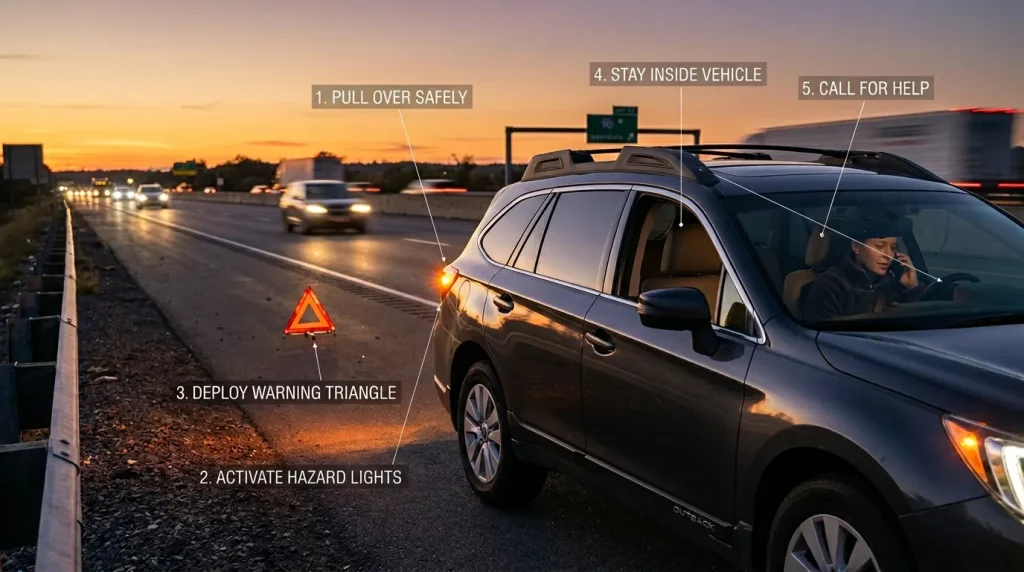
Immediate Safety Actions in the First Minutes of a Breakdown
When your car breaks down far from home, your first priority is safety and visibility. On US roads and highways, the first few seconds matter because traffic can be fast and unpredictable.
Move your vehicle away from the main traffic flow as quickly as possible if the car is still controllable. If you are on a highway, try to reach the right shoulder or an emergency lane.
Turn on hazard lights immediately so other drivers can see your vehicle from a distance. This reduces the risk of collision, especially in low visibility or night conditions.
Position your wheels away from traffic direction if you are parked on a slope or shoulder. This helps prevent accidental movement toward the road.
Only exit the vehicle if it is safe. If traffic is heavy or fast-moving, stay inside with seatbelt on until help arrives.
Place reflective warning devices behind your car if available. This creates extra visibility and alerts approaching drivers early.
Highway Safety Rules to Follow in the USA
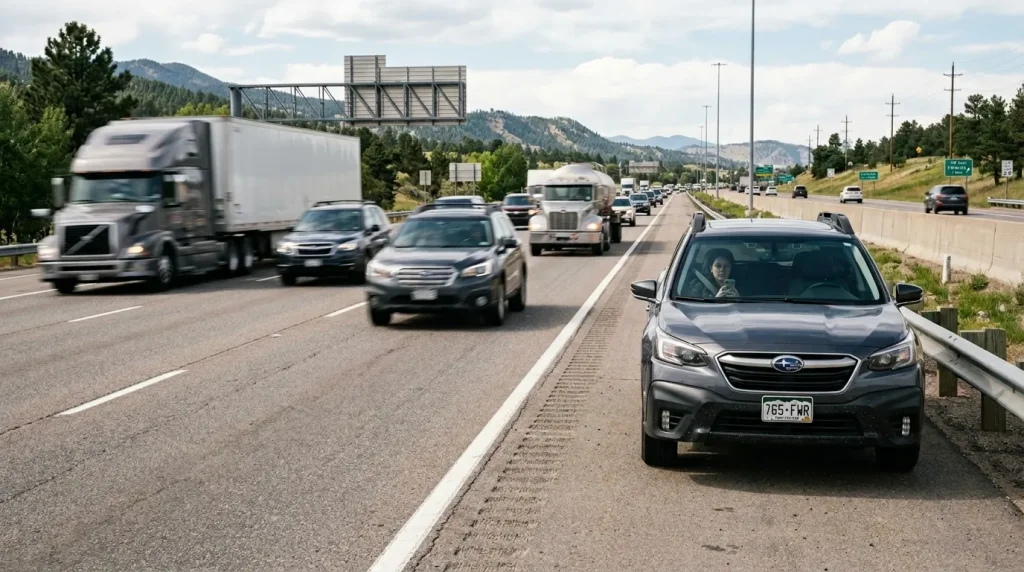
US highways can be dangerous during breakdowns, so following safety rules is critical.
Stay inside your vehicle when you are on busy interstates unless there is immediate danger such as smoke or fire. This is usually the safest position.
Move to the right shoulder or emergency lane if possible. Avoid stopping in active lanes or curves where visibility is low.
Never stand near moving traffic. Even a moment outside the vehicle near the road can be risky due to high-speed vehicles.
Call emergency services immediately if you are in a dangerous position such as blind curves, bridges, or heavy traffic zones.
How to Quickly Assess the Breakdown Situation?
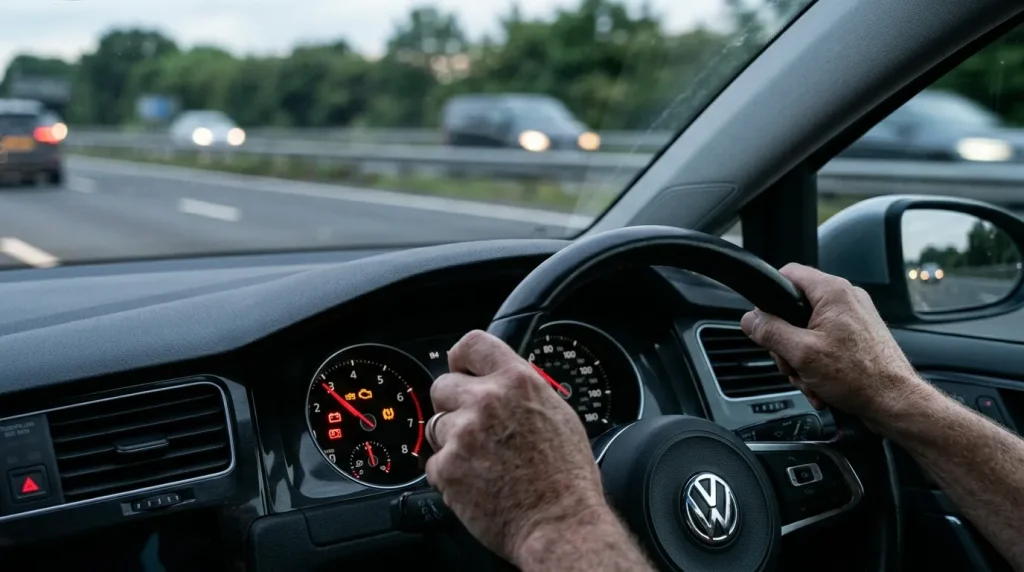
After ensuring basic safety, quickly try to understand what kind of breakdown you are dealing with.
Look for warning signs on your dashboard such as engine light, overheating alert, or battery warning. These indicators can help you identify the issue.
Decide whether the situation is safe to wait or requires immediate assistance. If there is smoke, strange noise, or loss of control, do not attempt further checks.
If safe, try a basic restart of the vehicle. Sometimes minor electronic or fuel issues may reset temporarily.
Common Reasons Cars Break Down on US Roads
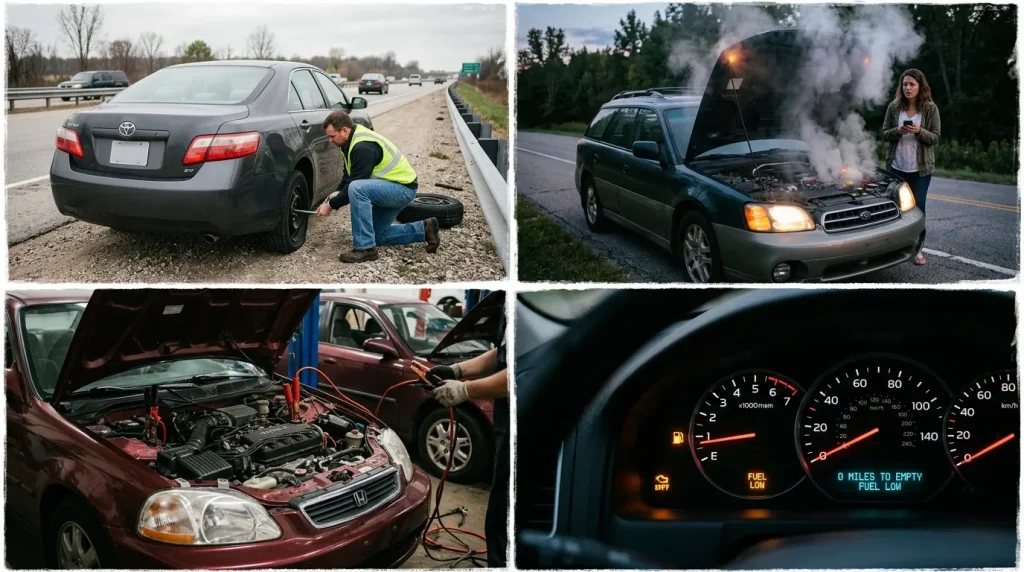
Understanding the cause helps you respond better.
Battery failure or a dead battery is one of the most common issues, especially in older vehicles or extreme weather.
Tire blowouts or flat tires often occur due to road debris or under-inflation.
Engine overheating can happen in long drives, especially in hot weather or due to coolant issues.
Fuel system problems may include running out of fuel or clogged fuel filters.
Electrical or alternator failure can stop the car completely and affect all systems.
What to Do Based on the Type of Breakdown?
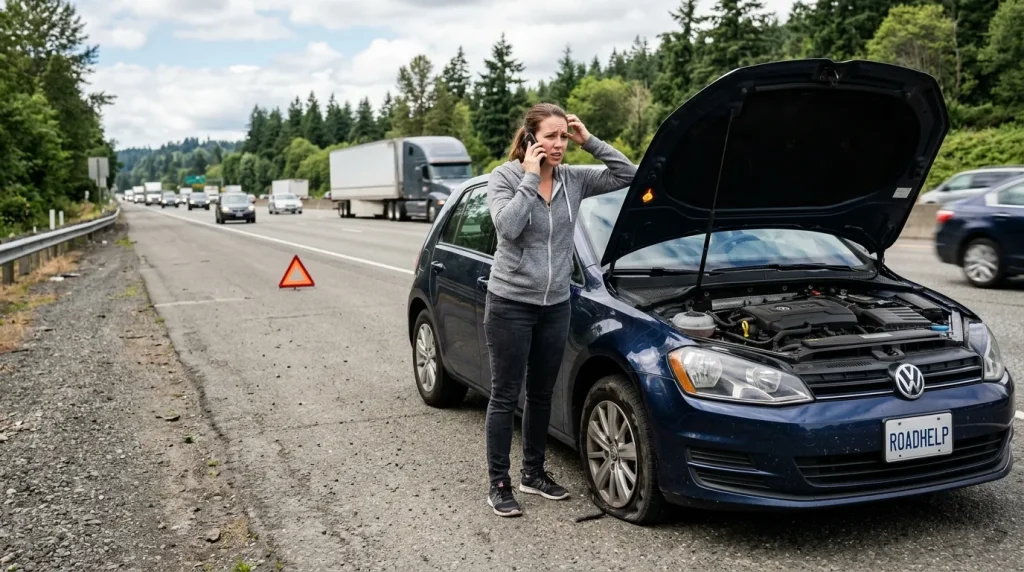
If it is a battery issue, turn off all electronics and wait for assistance. Avoid repeated ignition attempts.
If it is a flat tire or blowout, do not drive further unless absolutely necessary. Move to a safe position and wait for help.
If the engine is overheating, turn off the engine immediately and let it cool. Do not open the radiator cap.
If the issue is unknown or severe, stay in a safe position and wait for professional assistance rather than guessing the problem.
How to Call for Help and Share Critical Information?
Contact roadside assistance from eRideUp as soon as you are safe. Quick communication reduces waiting time.
Share your exact GPS location or highway mile marker so help can reach you accurately. This is extremely important on long US highways.
Clearly describe your vehicle problem in simple terms such as “car not starting” or “engine overheating.”
Mention the number of passengers and whether anyone needs medical assistance or special care.
Contact highway patrol or emergency services if you are in a high-risk area or feel unsafe.
Repair vs Tow Decision Making
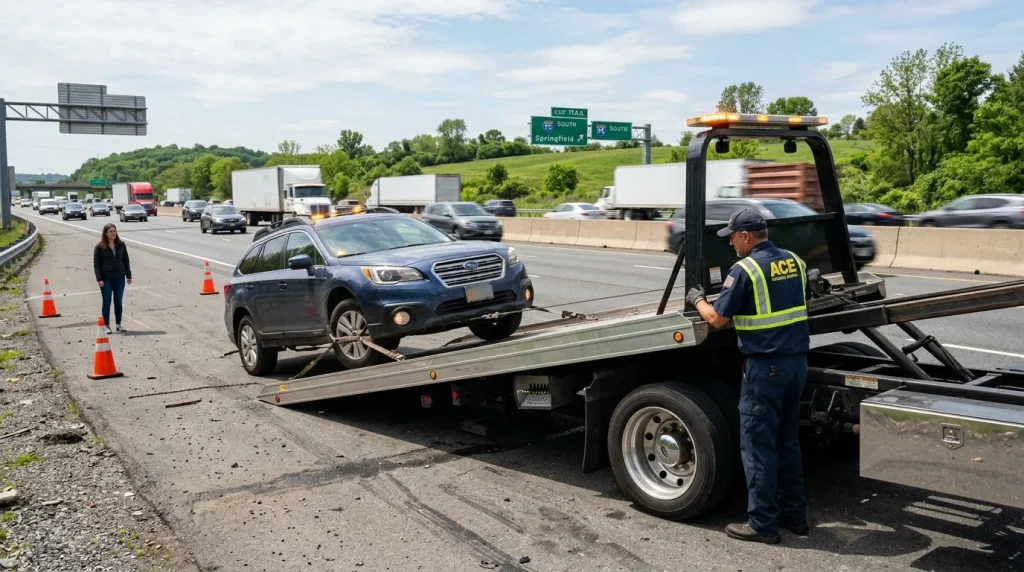
Deciding whether to repair or tow depends on the severity of the issue.
If the problem is minor and safe, a local repair may be enough to continue your journey.
If the vehicle is not drivable or unsafe, towing is the better option.
Sometimes waiting for inspection is the safest choice, especially when the problem is unclear or intermittent.
Towing Options During Emergency Breakdown Situations
A local tow can take your vehicle to the nearest safe repair location.
Long-distance towing is useful when you are far from home and want to bring your car closer to your destination.
Factors affecting towing include distance, vehicle condition, road type, and time of day. Highway breakdowns may require faster response due to safety risks.
How to Stay Safe While Waiting for Help?
Stay inside your vehicle if you are on a busy road or highway.
Manage weather conditions carefully. In extreme heat or cold, use air conditioning or heating sparingly while conserving fuel.
Conserve your phone battery by reducing unnecessary usage and keeping emergency contact ready.
Keep your hazard lights on so your vehicle remains visible to passing traffic.
Managing Travel Disruption After a Breakdown
If repairs take time, you may need temporary accommodation nearby.
Use local transportation options like taxis or rideshare services for essential movement.
Plan your return home based on repair time and vehicle condition to avoid unnecessary delays.
How to Avoid Unsafe or Untrusted Roadside Help?
Be cautious of unverified roadside assistance offers that approach you without confirmation.
Avoid services that do not clearly identify themselves or demand unclear payments.
Always use verified emergency support channels like eRideUp to ensure safe and reliable assistance.
How to Prevent Car Breakdowns on Long USA Trips?
Before long trips, inspect your vehicle thoroughly including brakes, tires, and battery condition.
Check tire pressure, coolant levels, engine oil, and overall vehicle health.
Follow a regular maintenance schedule to reduce unexpected failures during travel.
Keep roadside support active so help is always available in emergencies.
Essential Emergency Items for Road Travel
Always keep a safety kit in your car including flashlight, warning triangles, and first aid supplies.
Carry basic tools for minor issues like tire changes or small repairs.
Keep important documents and emergency contact numbers easily accessible in your vehicle.